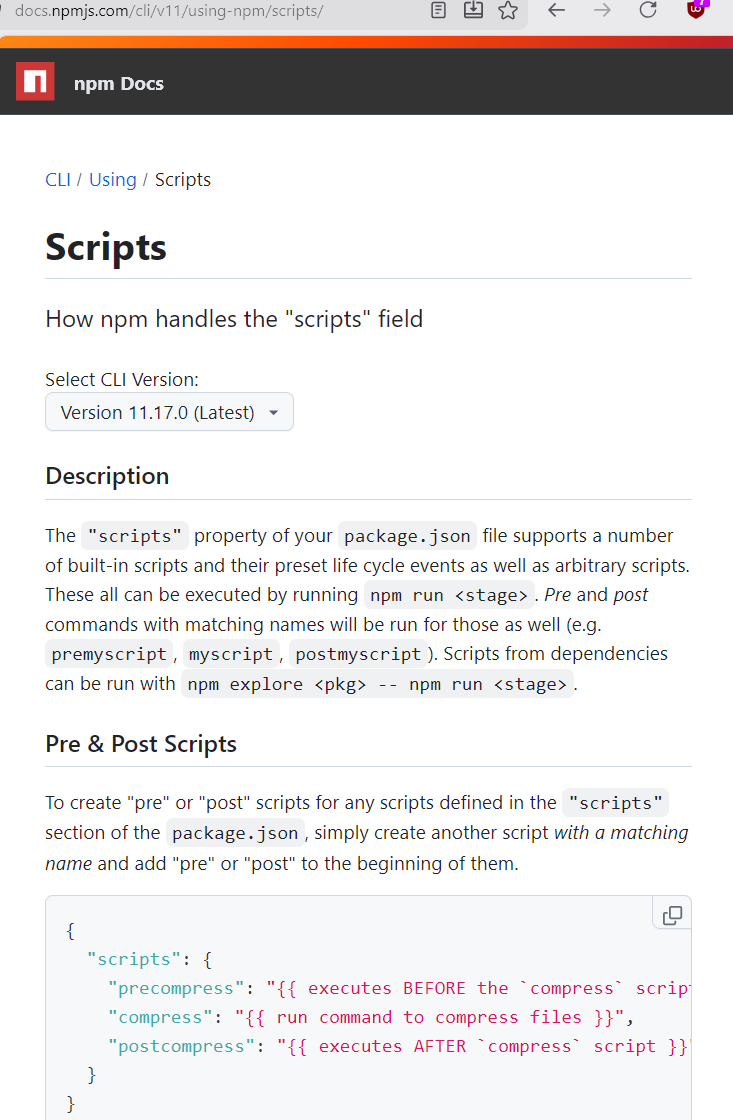
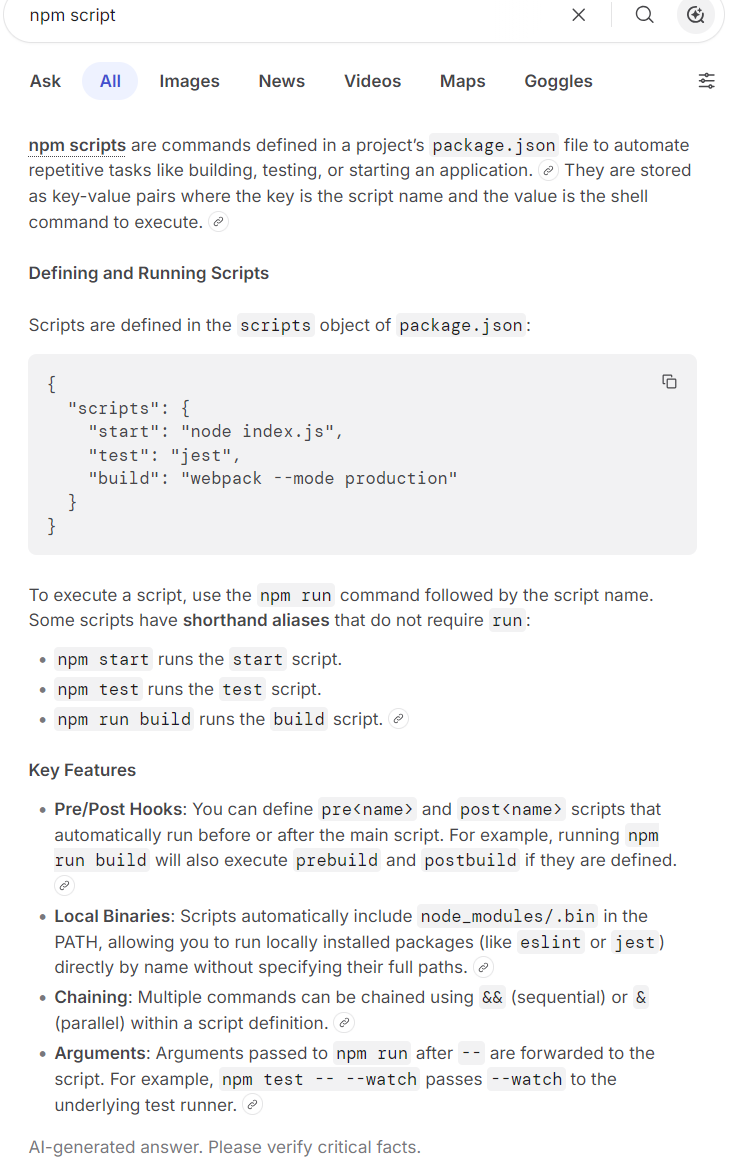
JavaScript task runners. 2012 to 2026
when doing JavaScript dev, you have lots tasks. install packages, compile them, bundle them. thus, task runners.
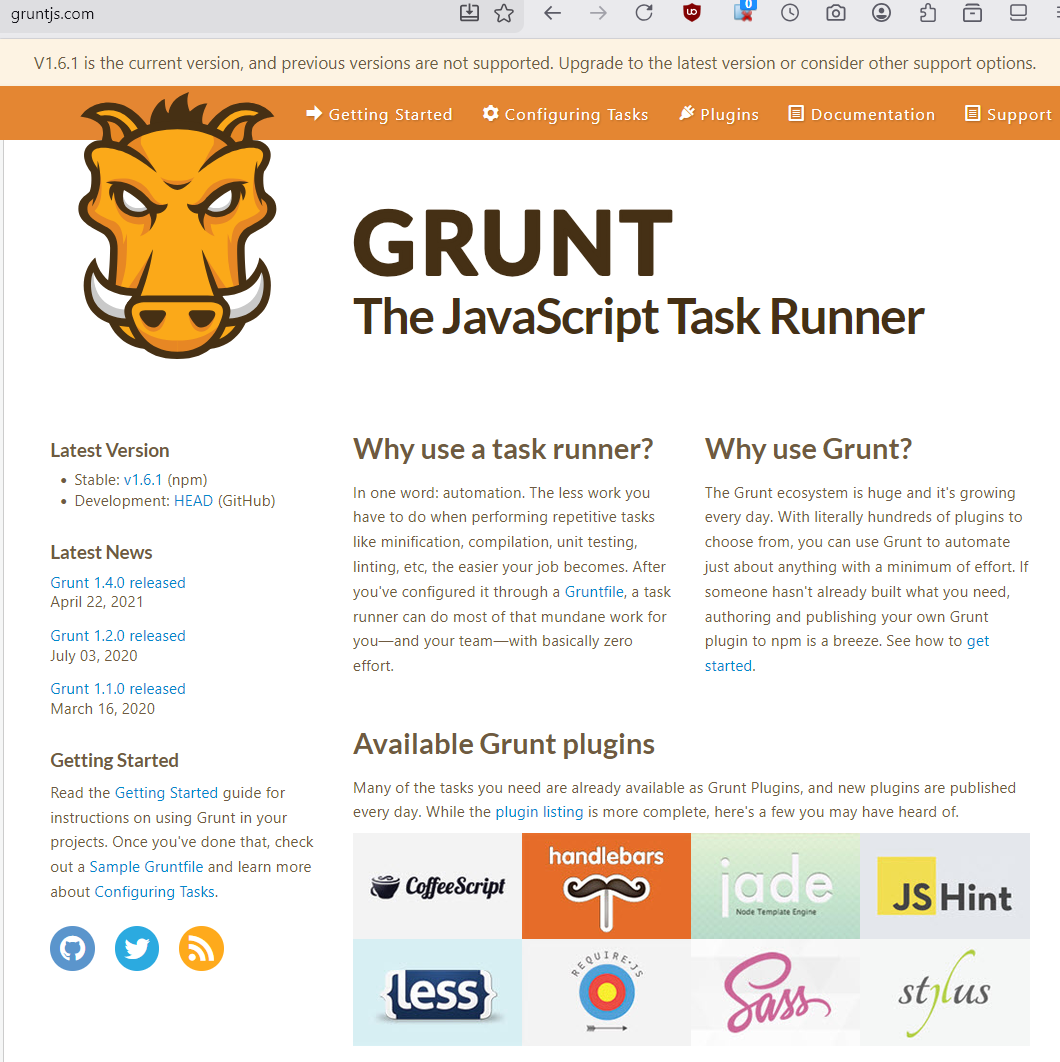
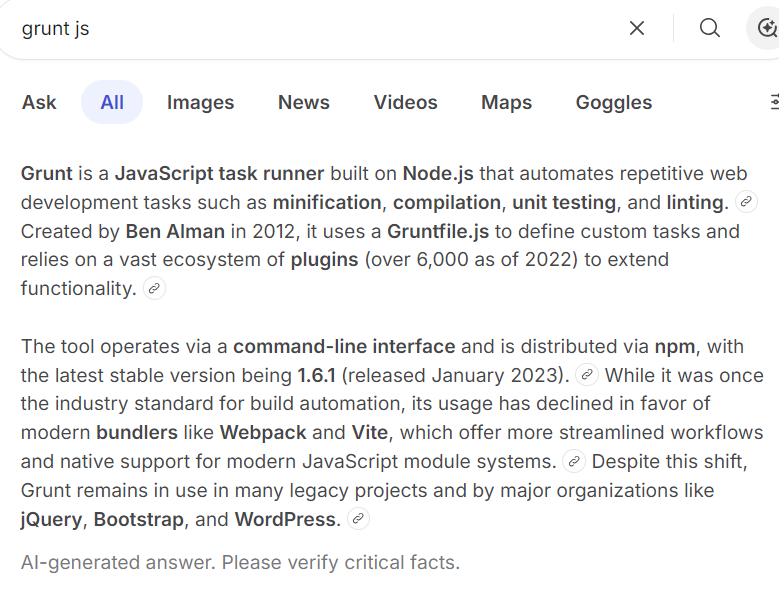
grunt js. task runner
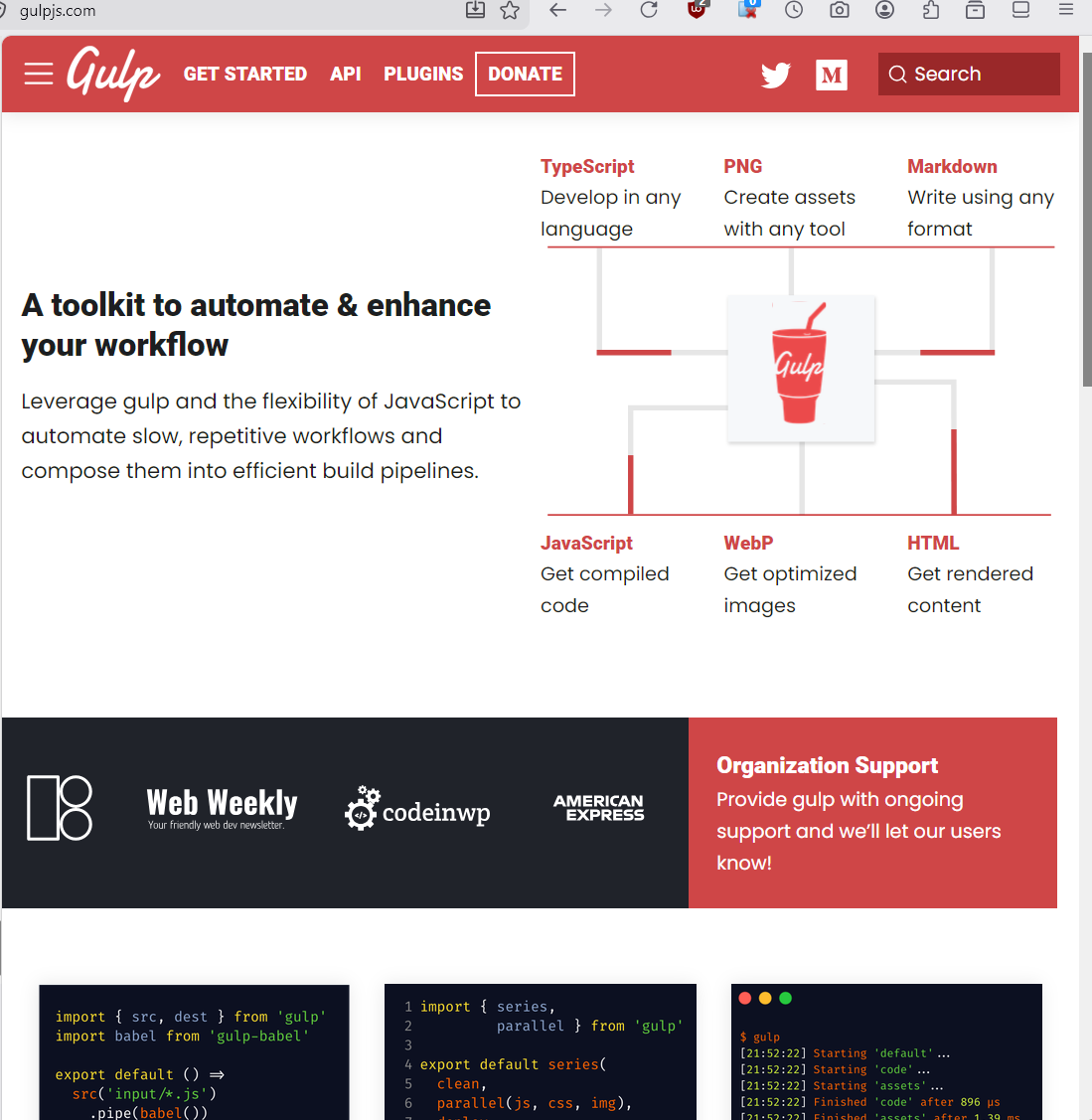
gulp js. task runner
what's gulp js, when was it popular
(ai answer)
Gulp.js (often just called Gulp) is an open-source JavaScript task runner and streaming build system for frontend web development.
What it does
It automates repetitive, time-consuming tasks in your development workflow, such as:
- Minifying JavaScript/CSS
- Compiling Sass/Less to CSS
- Concatenating files
- Optimizing images
- Linting code
- Running tests
- Watching files for changes and live-reloading the browser
Key features:
- Code-over-configuration: Tasks are defined in plain JavaScript (
gulpfile.js) rather than complex config files (unlike Grunt).- Streaming build system: Uses Node.js streams to pipe files through transformations in memory (very fast, fewer disk I/O operations).
- Huge plugin ecosystem (thousands of small, single-purpose plugins via npm).
- Very composable and flexible.
Basic example of a
gulpfile.js:const gulp = require('gulp'); const sass = require('gulp-sass'); const uglify = require('gulp-uglify'); gulp.task('styles', () => { return gulp.src('src/**/*.scss') .pipe(sass()) .pipe(gulp.dest('dist')); }); gulp.task('scripts', () => { return gulp.src('src/**/*.js') .pipe(uglify()) .pipe(gulp.dest('dist')); }); gulp.task('default', gulp.parallel('styles', 'scripts')); History & Popularity
- Released: September 26, 2013 (by Eric Schoffstall / Fractal Innovations).
- Peak popularity: Roughly 2014–2016/2017. It gained massive traction as a faster, more developer-friendly alternative to Grunt (the dominant task runner before it).
- It became one of the standard tools in the JavaScript ecosystem during the mid-2010s, especially for build pipelines before modern bundlers took over.
- Decline: Started losing ground around 2017–2018 as:
npm scripts(inpackage.json) became sufficient for many projects.- Powerful bundlers like Webpack, Parcel, Rollup, and later Vite took over most build needs.
Current status (2026):
- Still actively maintained (latest major version 5.0 in 2024).
- Has steady downloads (~7–9 million per month on npm).
- Used in many legacy projects and some large sites.
- Not the recommended choice for new projects unless you specifically want its code-based, streaming approach.
In short: Gulp was a big deal in the mid-2010s as the go-to task automation tool, but has since become more of a niche/legacy option in the modern frontend world.
npm scripts (task runner)